Silent Guardians: Exploring India’s Mangrove Forests
Mangroves are not loud landscapes. They do not rush toward you with dramatic peaks or crashing waves. Instead, they wait—quiet, patient, and deeply alive—at the meeting point of land and sea.
Walk into a mangrove forest and the world begins to soften. The ground feels different, the air carries a hint of salt, and the silence is never truly silent. Beneath your feet and around the roots, life is constantly unfolding. The twisted, arching roots rise above the water like nature’s own architecture, holding the trees steady where tides come and go without warning.
What makes mangroves truly fascinating is their ability to survive where most life would struggle. In salty, shifting waters, these trees have adapted in remarkable ways. Their roots breathe above the surface, their leaves filter salt, and their presence transforms unstable coastlines into thriving ecosystems.
In India, two of the most remarkable mangrove landscapes bring this story to life—Sundarbans and Bhitarkanika National Park.
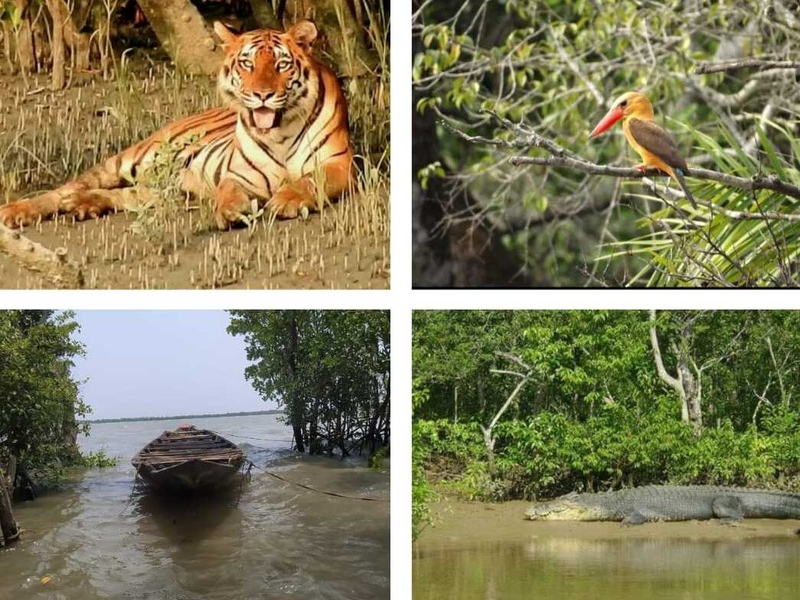
The Sundarbans, known as the largest mangrove forest in the world, is a place where rivers, tides, and forests merge into one living, breathing system. It is home to the elusive Royal Bengal Tiger, along with countless species of birds, fish, and reptiles. Here, survival is an art—both for wildlife and for the communities that live alongside this ever-changing landscape.
Further south, Bhitarkanika offers a different yet equally enchanting experience. Its dense mangrove creeks, calm waterways, and rich biodiversity make it one of India’s most unique ecological treasures. Known for its population of saltwater crocodiles, migratory birds, and rare plant species, Bhitarkanika feels like a hidden world—quiet, untouched, and deeply rooted in nature’s rhythm.
But beyond their beauty and biodiversity, mangroves hold a responsibility that affects us all.
They are natural shields. During cyclones and storms, mangroves reduce the force of winds and waves, protecting coastal villages and cities. They prevent soil erosion, preserve water quality, and act as one of the planet’s most efficient carbon sinks—absorbing and storing large amounts of carbon dioxide from the atmosphere.
Supporting mangroves is not just about saving trees—it is about protecting life.
When mangroves are destroyed for urban expansion, aquaculture, or pollution, we lose more than a forest. We lose protection from natural disasters. We lose breeding grounds for marine life. We lose balance.
That is why people must care.
Supporting mangroves can begin in simple ways—choosing responsible tourism, spreading awareness, supporting conservation efforts, and respecting these ecosystems when we visit them. Every mindful step helps preserve these fragile yet powerful landscapes.
Mangroves may not demand attention, but they deserve it.
Because in their quiet strength, they are protecting our coasts, nurturing our oceans, and reminding us that some of the most important forces in nature work silently—yet make all the difference.